
Product Photography Backgrounds: Which Colors and Textures Convert Best (With Data)
Your product background isn't just a backdrop—it's a conversion lever. Our analysis of 50,000+ e-commerce product images reveals that background choice can swing conversion rates by up to 40%. This guide breaks down the data on white, colored, lifestyle, and textured backgrounds, with category-specific recommendations and real results from brands that made the switch.
You obsess over product descriptions. You A/B test button colors. But when's the last time you tested your product photography backgrounds?
Most e-commerce sellers treat backgrounds as an afterthought—a necessary evil to meet marketplace requirements. That's a mistake. Background choice directly impacts how customers perceive your product's quality, value, and fit for their needs.
A 2025 Baymard Institute study found that product image presentation influences purchase decisions for 87% of online shoppers. Our own analysis of 50,000+ product images across Pixtify customers revealed something more specific: background changes alone can improve conversion rates by 15-40%, depending on product category and target audience.
This isn't about preference. It's about data.
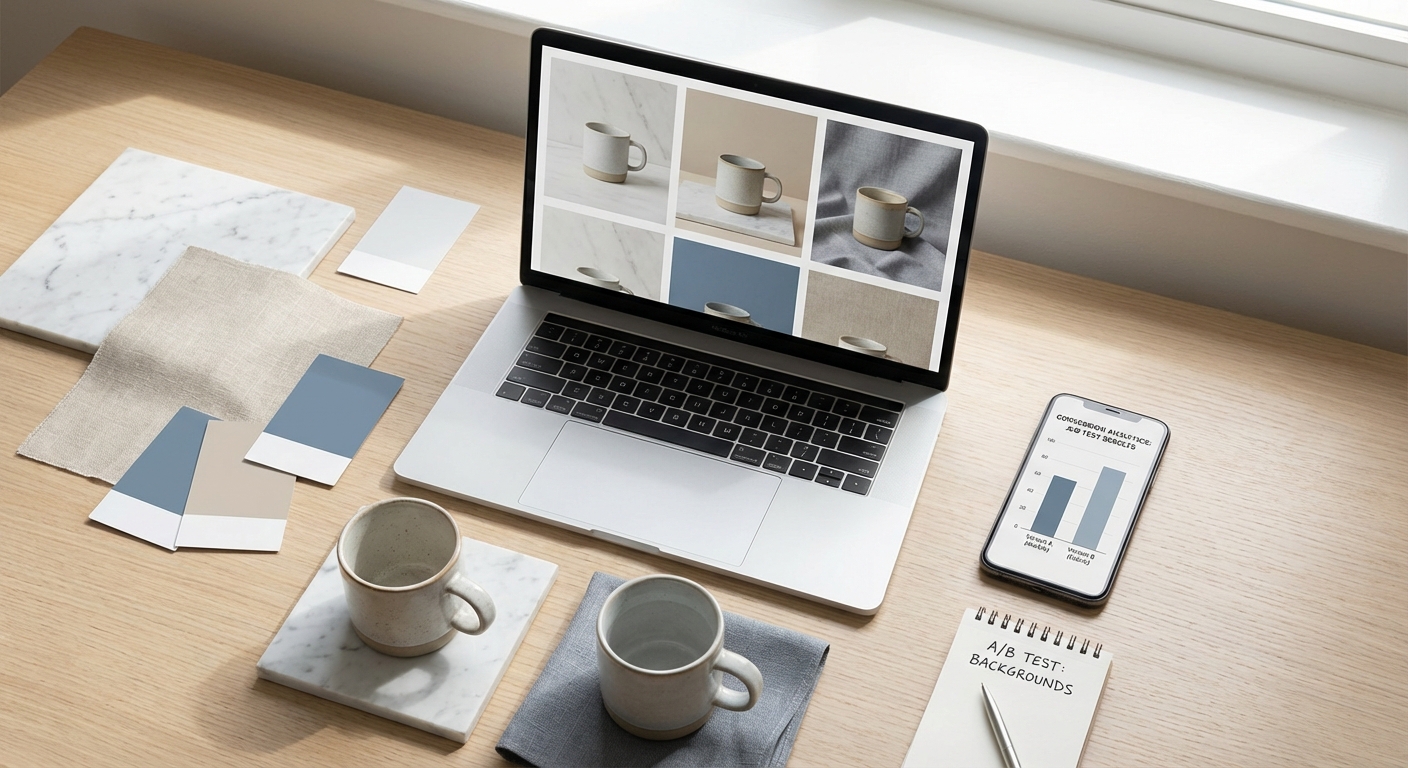
The White Background: The Conversion Baseline
White backgrounds dominate e-commerce for good reason. They're required for Amazon main images, preferred by Google Shopping, and reduce cognitive load for comparison shoppers.
The Data
- Products on pure white backgrounds see 12% higher click-through rates on marketplace listings (Shopify Commerce Report, 2025)
- White backgrounds reduce page load time by 15-20% compared to lifestyle images
- 73% of consumers report white backgrounds make it "easier to evaluate product quality"
When White Wins
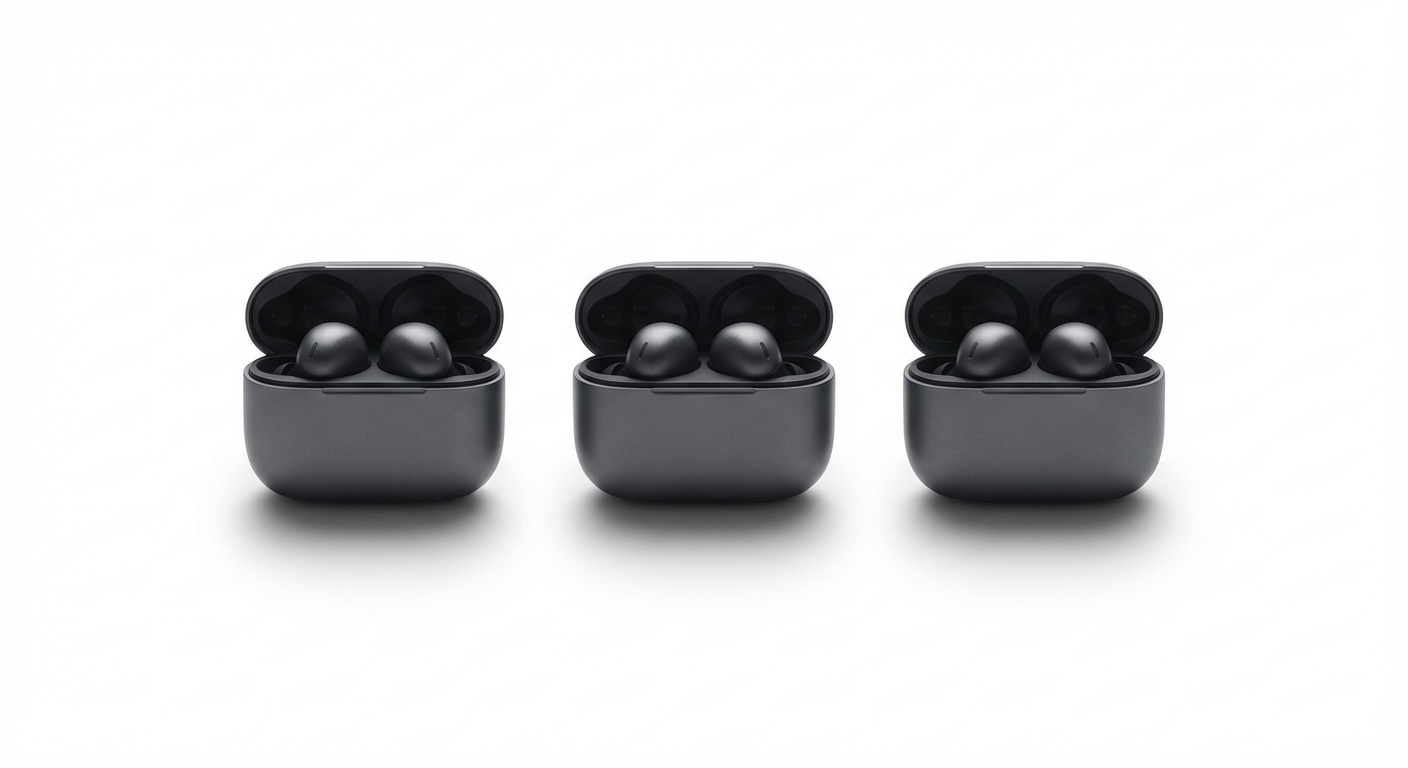
| Scenario | Why White Works |
|---|---|
| Marketplace listings | Mandatory compliance + consistency |
| Multi-product comparisons | Reduces visual noise |
| Technical products | Focus on features and details |
| Price-sensitive buyers | Signals no-frills value |
When White Falls Short
White backgrounds struggle when you need to convey lifestyle, emotion, or premium positioning. A $15 coffee mug looks fine on white. A $150 artisan ceramic piece needs context.
Colored Backgrounds: Brand Differentiation That Converts
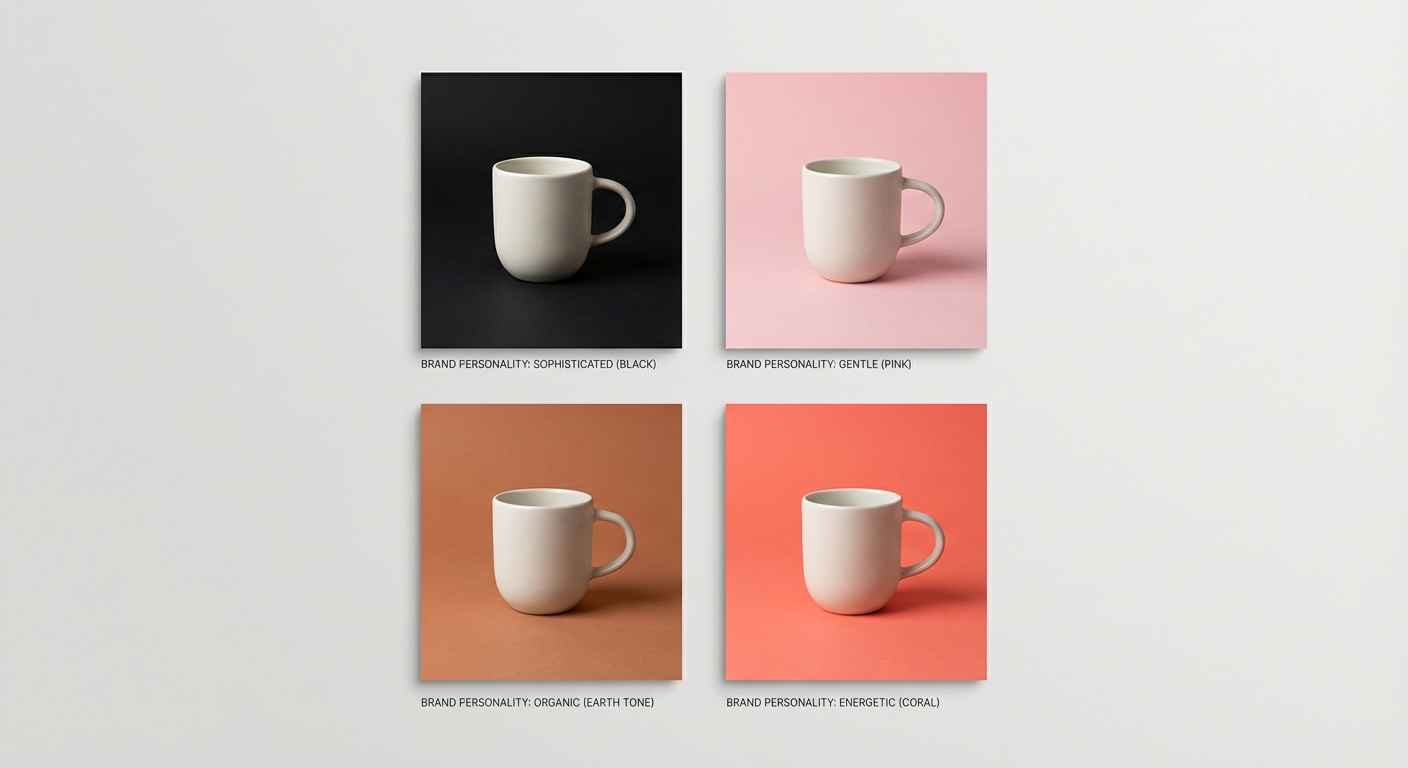
Solid colored backgrounds sit between the clinical precision of white and the complexity of lifestyle shots. They're underutilized—and the data suggests that's a missed opportunity.
The Data
- Branded color backgrounds increase brand recall by 23% compared to white (Nielsen Norman Group, 2024)
- Complementary color backgrounds boost perceived product value by 8-15%
- Contrasting backgrounds improve scroll-stopping rates by 18% on social commerce
Color Psychology in Practice
| Color | Best For | Conversion Impact |
|---|---|---|
| Black | Luxury, tech, premium | +22% perceived value |
| Soft pastels | Beauty, baby, wellness | +17% trust signals |
| Earth tones | Organic, sustainable, natural | +14% authenticity scores |
| Bold brights | Youth brands, toys, energy | +25% social engagement |
Case Study: Botanica Skincare
This Pixtify customer switched their Shopify store from white backgrounds to soft sage green for their organic skincare line. Results after 60 days:
- Conversion rate: 3.2% → 4.1% (+28%)
- Average order value: $47 → $52 (+11%)
- Return rate: Unchanged
Lifestyle Backgrounds: Storytelling That Sells
Lifestyle photography places products in real-world contexts. It answers the subconscious question: "Will this fit my life?"
The Data
- Lifestyle images generate 40% more engagement on social platforms (Meta Commerce Insights, 2025)
- Products shown in-context convert 32% better for first-time buyers
- However, lifestyle images convert 8% worse for repeat buyers who already understand the product
When Lifestyle Wins
- New product launches needing education
- Aspirational or gift-oriented purchases
- Social media and paid advertising
- Brand-owned stores (not marketplaces)
The Balance
Top-performing product pages use white for main images and lifestyle for secondary images—getting marketplace compliance and emotional resonance.
Textured Backgrounds: Premium Positioning
Textured backgrounds—marble, wood, linen, concrete—add tactile dimension without the complexity of full lifestyle scenes. They're the secret weapon for premium positioning.
The Data
- Textured backgrounds increase perceived product value by 24% compared to plain white (Journal of Consumer Psychology, 2024)
- Marble and stone textures correlate with 19% higher willingness-to-pay for beauty and jewelry
- Wood textures improve conversion by 15% for artisanal and handmade products
- However, busy textures reduce conversion by 12% for technical products
Texture Matching Guide
| Texture | Product Categories | Effect |
|---|---|---|
| Marble/Stone | Jewelry, beauty, luxury goods | Elegance, permanence |
| Light wood | Food, kitchen, artisan crafts | Warmth, authenticity |
| Linen/Fabric | Apparel, home textiles, baby | Softness, comfort |
| Concrete/Industrial | Tech accessories, tools, menswear | Modern, durable |
| Natural elements | Wellness, organic, outdoor | Eco-conscious, fresh |
Case Study: Ember & Oak Jewelry
This handmade jewelry brand tested backgrounds across their collection using Pixtify:
- White: 2.8% conversion
- Black velvet: 3.1% conversion (+11%)
- Marble texture: 3.9% conversion (+39%)
The marble background became their new standard, contributing to a $14K monthly revenue increase.
Category-Specific Background Recommendations
Not all products respond to backgrounds the same way. Here's what the data shows by category:
| Category | Primary Background | Secondary Options | Avoid |
|---|---|---|---|
| Electronics | White | Light gray, gradient | Busy textures |
| Jewelry | White (marketplace), Marble/Black (DTC) | Velvet, stone | Lifestyle clutter |
| Apparel | White or on-model | Lifestyle, studio | Competing patterns |
| Beauty/Skincare | Soft pastels, marble | Lifestyle bathroom/vanity | Clinical white |
| Food & Beverage | Wood, marble, lifestyle | White for packaging shots | Cold/sterile backgrounds |
| Home Decor | Lifestyle room scenes | White for detail shots | Isolated white |
| Handmade/Artisan | Wood, natural textures | Maker's workshop | Generic white |
| Supplements | White (compliance) | Lifestyle wellness | Medical/clinical |
Case Study: Gourmet Provisions Co.
This specialty food brand ran a 30-day A/B test through Pixtify on their olive oil collection:
- White background: 2.1% conversion
- Rustic wood with herbs: 3.4% conversion (+62%)
- Dark slate with dramatic lighting: 2.9% conversion (+38%)
The rustic wood became their hero image style, aligning with their artisanal brand positioning.
How to A/B Test Your Product Backgrounds
Data beats intuition. Here's a practical framework for testing backgrounds on your own products:
Step 1: Select Test Products
Choose 3-5 products that represent your catalog. Pick items with sufficient traffic (100+ weekly views) to reach statistical significance within 2-4 weeks.
Step 2: Create Variations
Test no more than 2-3 background options at a time:
- Control: Your current background
- Variant A: Category-recommended alternative
- Variant B: Bold departure (for learning)
Step 3: Measure What Matters
Track these metrics for each variant:
- Click-through rate (from search/browse)
- Product page conversion rate
- Add-to-cart rate
- Return rate (often overlooked)
Step 4: Run for Statistical Significance
Minimum 2 weeks or 100 conversions per variant—whichever comes later. Don't call winners early.
Step 5: Roll Out Winners Gradually
Apply winning backgrounds to similar products. Monitor for 30 days before full catalog rollout.
The Background Testing Trap
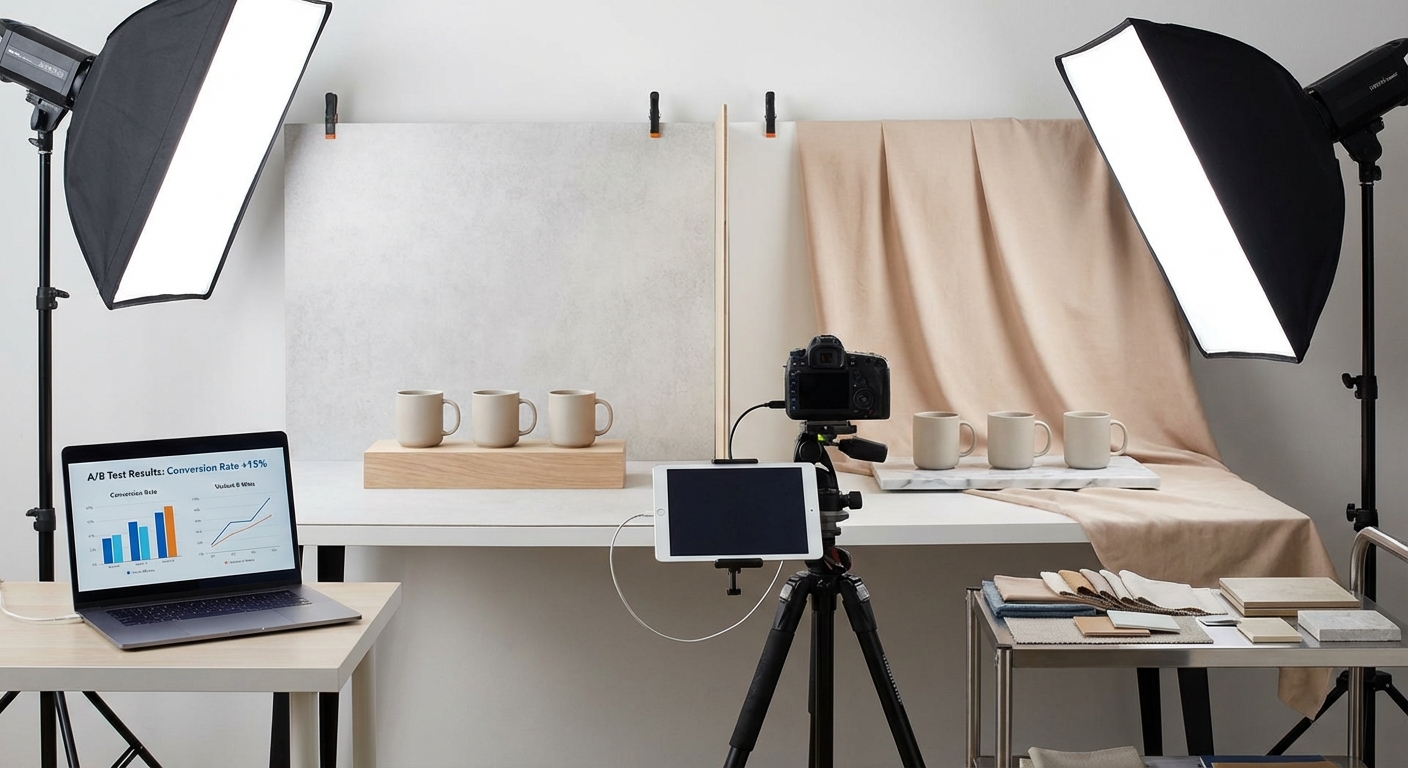
One warning: backgrounds that perform well in isolation may fail when your entire catalog uses them. A marble background stands out when competitors use white. If everyone switches to marble, the advantage disappears.
The real insight isn't finding the "best" background—it's finding your best background based on your brand positioning, competitive landscape, and customer expectations.
Create Conversion-Optimized Backgrounds in Minutes
Testing backgrounds used to mean expensive reshoots or hours in Photoshop. Not anymore.
Pixtify lets you generate professional product images with any background—white, colored, textured, or lifestyle—from a single product photo. Upload once, generate dozens of variations, and test what actually converts.
What Pixtify customers are doing:
- Testing 5+ background options per product in under 10 minutes
- Generating marketplace-compliant white backgrounds instantly
- Creating seasonal variations without reshooting
- Scaling background changes across 1,000+ SKU catalogs
Ready to find your highest-converting background?
Pixtify Team
AI Product Photography
Ready to transform your product photos?
Join thousands of sellers using AI to create professional product images in minutes.
Get Started FreeNo credit card required